The UAE is moving quickly toward its Net Zero 2050 ambitions, and this shift is reshaping how industries think about energy. Fleets, logistics operators, construction companies, and essential service providers are being encouraged to reduce emissions in ways that are both measurable and immediately achievable. Biodiesel blends have emerged as one of the most practical steps companies can take today because they offer a renewable, lower-emission alternative that fits directly into existing operations.
Unlike future technologies that require new infrastructure or vehicle transitions, biodiesel blends allow companies to make progress right now. They provide a cleaner option that does not interrupt operations and supports compliance with the sustainability expectations increasingly present in UAE tenders and industry standards.
What Are Biodiesel Blends
Biodiesel is produced from natural oils, fats, or waste cooking oil. When blended with petroleum diesel, it forms fuels such as:
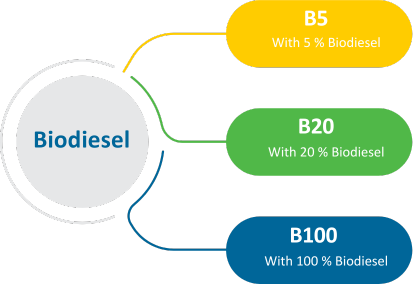
In the UAE, B5 and B20 are the most commonly adopted because they enhance sustainability performance while maintaining full compatibility with modern diesel engines and standard storage systems. These blends give companies a straightforward, low-risk path into cleaner fuel use.
An important advantage for the UAE is its climate. Globally, biodiesel adoption is often limited by cold-weather performance concerns, as biodiesel can thicken at very low temperatures. This limitation does not apply to the UAE. The region’s consistently warm climate eliminates one of the main barriers seen in colder markets, allowing B5 and B20 blends to operate reliably throughout the year.
Environmental Advantages That Deliver Measurable Progress
Lower carbon emissions
Depending on the feedstock, biodiesel can reduce lifecycle greenhouse gas emissions by up to 80 percent. These reductions offer organizations verifiable data for emissions reporting and ESG disclosures.
Cleaner combustion
Biodiesel produces fewer particulates and lower sulfur emissions compared to conventional diesel. This is especially valuable for operations in urban areas, construction sites, and logistics hubs where air quality and worker exposure matter.
Circular economy benefits
When produced from waste cooking oil, biodiesel supports the UAE’s circular economy objectives by turning a waste stream into a renewable energy source.
Alignment with national climate goals
Using biodiesel contributes directly to the UAE’s energy transition and supports responsible fuel practices across multiple sectors.
Operational Advantages That Matter in UAE Conditions
The UAE’s operating environment places heavy demands on vehicles and machinery due to high temperatures, long operating hours, and intensive duty cycles. Biodiesel blends provide meaningful operational benefits:
 |
Extended engine life due to improved lubrication |
 |
Reduced maintenance thanks to cleaner combustion |
 |
Simple integration with existing tanks, pumps, and engines |
 |
More stable long-term planning by diversifying the energy mix |
These advantages contribute to higher uptime, smoother fleet management, and more predictable operating costs.
A Bridge Between Today’s Operations and Tomorrow’s Technologies
Many UAE companies plan to transition to electric or hydrogen-powered fleets as these technologies evolve. However, practical realities remain: charging networks for heavy-duty EVs are still emerging; hydrogen availability is at an early stage; and fleet replacement cycles require time and capital. Biodiesel blends bridge the gap. They allow businesses to cut emissions immediately without waiting for new vehicle platforms or infrastructure to mature.
Compliance with UAE Regulations and Industry Requirements
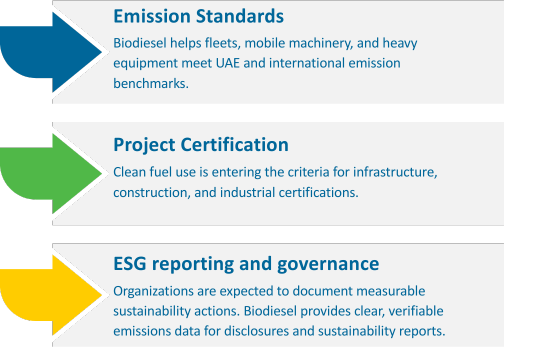
Sustainability performance is becoming an increasingly important factor in procurement evaluations across both public and private sectors. Biodiesel blends support several areas of compliance:
Emission standards
Biodiesel helps fleets, mobile machinery, and heavy equipment meet UAE and international emission benchmarks.
Project certification
Clean fuel use is entering the criteria for infrastructure, construction, and industrial certifications.
ESG reporting and governance
Organizations are expected to document measurable sustainability actions. Biodiesel provides clear, verifiable emissions data for disclosures and sustainability reports.
Beyond current regulations, biodiesel adoption prepares companies for the upcoming shift toward mandatory emissions reporting in the region.
Challenges and the Path Forward
Like any emerging clean fuel, biodiesel adoption requires planning. Blend availability varies by supplier. Storage practices may require minor adjustments depending on blend percentage. Costs can differ based on feedstock type. These challenges are becoming easier to manage as the UAE expands its renewable energy ecosystem and biodiesel supply chains mature. Partnering with certified providers ensures quality, safety, and compliance. Biodiesel is expected to remain part of the UAE’s future energy mix alongside electrification, hydrogen, and other low-carbon solutions. It gives companies a practical way to begin reducing emissions today while preparing for tomorrow’s technologies.
The Path Ahead
Biodiesel blends offer the UAE a realistic, high-impact path toward cleaner operations. They support national sustainability goals, improve environmental performance, and integrate seamlessly into existing equipment and fleets. Clean and renewable energy solutions are shaping the next era of mobility and industry in the UAE. Biodiesel provides an immediate and future-ready step for companies committed to meaningful sustainability progress.
FAQs

Mixtures of renewable biodiesel and petroleum diesel. Common ratios include B5 and B20, which provide cleaner combustion while remaining compatible with most diesel engines.
.png)
Yes. The UAE’s warm climate eliminates cold-weather limitations seen elsewhere, allowing B5 and B20 to perform reliably year-round.
.png)
They reduce lifecycle emissions, lower particulate pollutants, support circular economy practices, and help companies begin decarbonizing without equipment changes.
.png)
Costs vary, but biodiesel can reduce maintenance and downtime due to cleaner combustion. It also strengthens sustainability reporting, now a key factor in regional tenders.
.png)
It provides immediate emissions reductions while building the foundations for future compliance and low-carbon transitions such as electrification and hydrogen.